Saturday, January 1, 2011

Jane Tells of Ellen

"Mr. Steamer Chest"
By Julia Whitney 1940
A story about Ellen McKell Matheson written by a great-granddaughter, Julia Whitney Rawlins

“I’m on the list of unrewardables of the family.”

This was Mr. Streamer Chest boasting of his usefulness to Jane. She wasn’t a common Jane with mouse-colored hair and plain features. She was a “flaxen-haired, one-time-pretty-faced” wax doll. Although she bore the marks of hard usage, she still carried herself with the dignity and charm of a large wax doll.

Anyone observing would have noted the look of disgust, followed quickly by tolerance, that passed over Jane’s face. She had been in the family longer and had been a more intimate member of the family than had the trunk, but she said nothing. She was thinking of that crisp October day in 1853, when she was sitting in the shop window, all new and pleasing to the eye. She had been lonely then, but not since.

Steamer Chest became impatient. Why didn’t that Jane say something? His conscience annoyed him, for he was remembering certain things which made him wish he could recall the words just spoken.

He was about to speak when Jane began, “I was thrilled that morning in 1858 when a nice-looking sailor man came in and gave me a critical glance. But the thrill was even greater when Daniel Matheson took me home to his dark-eyed, dark-haired sister.

“Ellen-- for that was her name-- was eight years old. Daniel Matheson was her father and Catherine Treasurer Matheson, her mother. Ellen’s full name is Ellen McKell Matheson and she was the eighteenth child. At Ellen’s eighth birthday, the Matheson’s were still living at the place of her birth, Edinburgh, Scotland.

Long before this birthday was over, I knew my affection for Ellen would never end. I loved her sweet voice and I could listen to her sing hour on hour and never grow weary.

Ellen’s father came home the night after I arrived. He was a jolly, but deeply thoughtful man. He was educated as a Presbyterian minister, and he traveled about, preaching in one of his several languages that suited the audience.

Since Ellen’s mother worked at a factory, we, with the other children of working mothers, spent our time in a day nursery.

A few months passed. One night a Mr. Albert Carrington came to the house and announced himself as a Mormon missionary. The folks (they were my folks by now because I loved them so) my folks invited him in and he talked with us. We liked to listen to him. He had a nice voice and a sincerity of tone that charmed us. He and father had many a discussion of the different phases of the gospel, and since we liked his message, we set a date for our baptism to the church.

Ellen took me with them that day and I witnessed a solemn performance. We all felt it was a great step forward. From this time one, the family worked to one end -- Zion as our Home.”

Then in 1861, we were ready to sail. It was the fall that Ellen was eleven. I shall never forget that long, tedious journey with nothing but water and more water on all sides. It was one time that I was thrilled with my position in the family for seasickness just afflicts mankind.

During those months, Ellen and I had plenty of each other’s company. Most times it was pleasant company but sometimes we got on each other’s nerves. Ellen would often sing for me, so you can imagine that my journey wasn’t always tedious. Ellen was growing prettier, her dark hair growing longer.

We landed at New Orleans and came up the Mississippi. This new land was a mystery to us, but it represented a land of success. It was still winter when we arrived at Winter Quarters, and a good family good us in until that time when we could start for Zion.

All went well for us for a time, but as in most families here, sickness entered the home. Ellen was the victim of typhoid fever. I, for one, was discouraged in the greatest sense of the word. It was nearly time to start across the plains, too.

Then a joyous day arrived. Men and wagons from Utah were ready to start and we were too, except for the fact that Ellen was still ill. But it had seemed such a long wait, and Ellen was in favor of leaving with this company, so we went. It was still cold when we started and the ice on many of the rivers had not broken up. This was the case of the Platte River, so the company was crossing over the ice. But fate was against us. Our wagon broke through, and we were all plunged into the icy water. I never did feel the same after, and it may be said that many anxious hours were spent over Ellen’s bedside. It was during this period of affliction that we became acquainted with Solomon Wardell. He had come to Utah four years before and was now helping the immigrants across the plains. He had been seventeen when he had left England with his parents. He had not quite finished his apprenticeship in England, but he was a fairly good shoemaker.

He came to our wagon often to see how Ellen was and to sheer us up. But when he continued to come after she was well, I began to suspect that I was losing my place in her heart to him. I soon became reconciled to this new condition for he was a fine man.

His parents and he were settled at Parowan. We settled there too. I sometimes suspected a motive, but such is love. Our Parowan home was a one-roomed, log cabin and there was not a great deal of room for me. There was so much to be done that there was no time for me either. In those days, the only time I felt I was needed was when Ellen would have an attack of rheumatic fever caused by her cold dip in the Platte River. At these times she talked with me as in “days of yore.”

Ellen and Solomon were ready to be married when she was sixteen. They were married on June 27, 1867. I remember her homespun dress with its tight waist emphasizing the smallness of hers, and the big full skirt.

Although I was sitting upon a shelf of the new cabin built by Solomon’s father at the time of the wedding, I have heard the story of that wedding many times. The part enacted at the cabin I saw of course.

A portion of the town’s boys -- and not the most gentlemanly portion -- came to the cabin with finely cut horsehair, which they lavishly spread between the blankets of the bed. After accomplishing this delicious task, they went off to lie in wait for the unsuspecting and helpless pair. Solomon was locked in the shoe shop and Ellen guarded in the cabin. After protesting till she was tired, Mrs. Wardell told me all about it. My, I envied her -- I almost wished I had been human, for I was real pretty and surely someone would have had me.

Shortly after the marriage of Ellen and Solomon. Panquitch was being settled, and since Panquitch needed a shoemaker, we were called. The next marker in our lives. (I felt closer to Ellen, now for she enjoyed talking to me while Solomon was at work.) The next marker was that terrible Indian Massacre. We were obliged to pack all our belongings on an old, worn-out mare, our only means of conveyance. We started out in snow up to the horse’s chest. We did have the advantage of the frozen snow most of the way.

So we came back to Parowan and our little log cabin was home once again. This was my period of great rejoicing for our home was blessed with children, first Julia Ann, then John, Elizabeth and Mary. I loved children and though each one had his part to play in the breakdown of my appearance, they loved me.

I have always marveled that people didn’t seem to appreciate the different way that food was obtained here in Parowan. Back in Scotland, every food seemed tame. Here in Parowan we often went out (sometimes to the detriment of my wax body) and gathered salt from the salt flats by Parowan. A little higher up we gathered saleratus to leaven our bread, wild berries represented the fruit, and wild game the meat. Sugar beets were made into sugar for the household. Later sugar cane was raised and molasses became the chief sweetening.

Speaking of molasses reminds me of an Indian story. You see that leech over there by the stove. Ashes are put in it, water poured over them, and the liquid drained off and used for lye in the soap. One day I was sitting in the shade watching Ellen prepare to make soap. She had put the lye on the heat before adding the fat, when an Indian appeared. Now Ellen wasn’t on “Love your Neighbor” terms with Indians, but there was no escape. He came forward, indicated the lye water which had the dark cast of molasses, and said, “White squaw givum Indian peaugament (sweets).” Ellen wishing to live, tried to explain to him that it would burn, “no good for the tummy” and so on. The Indian said, “White squaw lie.”

By this time, I was searching for my sleeve so that I might laugh up it. But I did not wait for my sleeve when he scooped up a wooden dipper of this water and drank it, and then rapidly left the country making queer noises.

Ellen didn’t rest easy after that. She was sure her life would be ended by this Indian if he lived or by his tribesmen if he died. Six weeks passed and he came back. He carried with him a string of twelve or thirteen speckled trout, and his mouth, I noticed, was not what it used to be. He presented the fish to Ellen with, “White squaw no lie. Heap good squaw.” He promised her all the wild game she could use, and he kept his promise. Besides this he gave Ellen the name “White Mother.”

Once again Solomon’s trade led him to a new settlement. He was called to Snowflake, Arizona. We started out with plenty of provision for the trip, but since we had not planned on a two months’ trip, our food ran out. You can imagine our state of mind. There we were in the winter on the road alone, and no food. We solved the problem by calling on the horses and taking their bran from them. As luck would have it, we arrived during the coldest winter in history. Food in this country was scarce this year. Maxcall, a wild plant, furnished food for four days at one time. Grain was among the exceedingly great number of “have nots” at this time.

We lived here three years. Ellen’s health was too poor to permit a longer stay, and the food didn’t help her condition. Therefore we came back to Parowan.

In all these years, I was very happy, for there were children, and I felt life was worth living because I was needed. Lydia, Solomon and Sarah Alice had joined our ranks. Of all the children, I loved Mary the most. You ask why? She was always in trouble and she needed me to comfort her. She has caused me much misery, not only physically, but mentally as well.

I’ll never forget the time when she was two and a small irrigation ditch just about claimed her as a victim. Later when she nearly choked to death on a button she had swallowed, I thought I would go wild. Chest, dear, I know that as much as she loves me and I love her, that she will be the cause of my death.

I have had a grand life, have I not? But I’m tired. I think I shall go to sleep. It is great of you to listen so patiently.” With these words Jane fell asleep, and the chest sat reflecting on what he had just heard.

Epilogue
Some time later, when Julia Ann was going through the contents of the trunk, she found a letter by it. In this letter she found this paragraph: “Jane was right when she said that Mary would be the death of her. The day after our conversation, Mary took her out in the fields under that horrid July sun. When Mary came back without Jane, I knew that her hour had come. A few days later Mary came in with the remains of Jane. It was a sad day for all.”

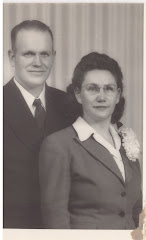
Solomon Wardell and Ellen McKell Matheson

We have learned a few additional interesting facts about Solomon and Ellen (Nellie) from The Matheson Clan compiled by Veldron and Leslie Matheson

We know that Solomon went back to Florence, Nebraska to help Saints cross the plains on several occasions. He was approximately age 21. On one of these trips he met Ellen McKell Matheson who he married 3 years later.

From Alexander Matheson’s journal (who later became Solomon’s brother-in-law), we learned that the next year he crossed back across the plains to assist another group of emigrants.

Alexander states, “About the middle of March, 1863, Apostle Erastus Snow of St. George, received a call from President Brigham Young to send a train of 40 wagons back to Florence, Nebraska, to bring a number of emigrants to Utah. Apostle Snow received the letter late at night. Early the next morning, he called on me to go as a teamster, which I cheerfully did. I was the first man he called on.”

“There were four mounted horsemen who guarded the cattle at night, Erastus McIntyre, Solomon Wardell, Bill Lytle, and William Alexander. There were four yoke of oxen to each wagon.”

“We left St. George on April 1, 1863. We arrived at the Mississippi River where we waited six weeks for the emigrants to come 200 miles up the river. We started the return trip about July 24th, and we out-traveled every other ox train on the plains that year. We were called, “Hell Saving Dixie.”

“As an example of our energy, every man would have his eight head of oxen picked out of over 300 head and ready to start in twenty minutes from the time they were driven into the corral. This of itself was no small matter. Everything was well ordered and good counsel was always given and generally accepted. Prayers were never neglected, no matter how busy we were.”

In this days, there were enough discomforts in crossing the plains that very few people wanted to return. Obituary notices often said, ‘She walked all the way across the plains.’ Quite so, as there were twelve persons to each wagon. Due to hauling their bedding and luggage, the chances to ride were negligible.”

In Alexander Matheson’s journal, he talked about when the pioneers left Parowan to settle Panguitch. They went to Panguitch in April 1864. Some of the original settlers included Daniel and Alex Matheson. I suspect that Daniel’s wife Catherine was with them. I also would think that Ellen “Nellie” was with them. The pioneers were in Panguitch from 1864 until May 8, 1866 when they were evacuated because of the Black Hawk wars.

Solomon and Ellen “Nellie” were married in Parowan on June 29, 1865. Solomon and Ellen “Nellie” were married at the home of John Wardell (Solomon’s father) by Thomas Devonport in Parowan on June 29, 1865. Witnesses were William Gurr and John Wardell.

In Panguitch, “Some very enjoyable dances were held with music provided by John and Julia Lowder, with Sid Littlefield and Solomon Wardell as fiddlers; John S. Hyatt was caller and master of ceremonies. There were no evening dresses, but everyone dressed in their best as befitted the occasions. The hall was lighted with a few precious candles. Occasionally there would be a minstrel show and other forms of entertainment. There were a good number of fine singers in Panguitch; Lydia (Alexander’s wife) with her sweet singing voice was one of them. A choir led by Thomas Gunn added much to the enjoyment. The only amusements were the simple ones that the settlers could originate themselves.”

The tremendous difficulties that they faced during these years is depicted by the story of Solomon’s violin. A granddaughter stated, “My grandfather did play the violin. He played for dances. My mother tells me that during a trying period he traded his violin for a barrel or sack of flour.”

Solomon was a shoemaker and proprietor of his shoe shop. His Church ordinances and ordinations include:

Elder (Parowan Early Records) no date
Seventy (membership received in Panaca Ward states Seventy, 1888)
Endowment, April 17, 1871, Endowment House
Church Service: Worked for kindred dead in the St. George Temple

“So great was Ellen and Solomon’s faith in the church that they heeded each Church call.”

Tuesday, December 14, 2010

Christmas in January

 
Merry Christmas From Our House to Yours 
Mother and I were talking about Christmas.  When Mary Lou and I were very young, we would always get beautiful dolls, and in the very early years I remember painted, tin dishes.  We played into the early morning hours, pretend tea parties with our new dolls and our pretty dishes.  Mother told me that one of her favorite gifts was a "Little Orphan Annie" tin dish set.  She told me, "Oh if I just had one of those little cups or a dish."  That started me on a quest.  From then on, I frequently checked the internet for 1920 vintage tin "Little Orphan Annie" play dishes.  When I saw an antique store, "Little Orphan Annie" was all I sought.  No luck, nothing.

One early fall afternoon, while walking back to the office, I passed a familiar antique store on Center Street in Provo.  I still had a few minutes, so I decided to stop in and look.  There it was.  Not the tin dish or cup, but a 1920's vintage Little Orphan Annie oil cloth doll!.  I considered the price, swollowed, thought of mother and bought it.
Little Orphan Annie 1920's Vintage
I was so excited, I wanted to call mother and tell her... but couldn't because it was to be Mother's Christmas present.  I wanted so much to send it to her, but Kimi was working on a lap quilt and hadn't quite finished it yet.  So I waited.  Christmas came and went, and Kimi had just finished the lovely quilt she had been working so diligently on.  It was beautiful. She has an amazing talent.  I had long since sworn off making any more winter trips to Wyoming.  The weather and roads had proven many times to just be too unreliable and oft times treacherous.  It was early January 2000 and we had the most extraordinary break in the weather.  You might say a "January Thaw".  Kimi and I decided to jump in the car and take our gifts to Mom and Daddy.

The weather couldn't have been more perfect.  It was a beautiful drive, and the roads were clear and dry.  When we reached South Pass, we saw Golden and Bald Eagles on nearly all the telephone poles.  What an amazing sight!  Oh how we enjoyed this special, unplanned trip home.

We reached Lovell in the evening.  We pulled into New Horizons, even though it was late, we were anxious to see mother.  The large gathering room was cheerfully decorated.  The men were huddled close around the television.  I saw mother sitting in a wheelchair, taking in any activity that was of interest.  Kimi was walking faster than me and when she reached mother, I heard her say, "Hi Grandma!".  Mother looked up and smiled that wonderful, sweet smile.   I could tell she hadn't really heard what Kimi had said and didn't immediately recognize her.  We weren't expected.  Then mother saw me, and I will never forget the look on mother's face!  She looked at me, then back to Kimi, and then the full realization of family sunk in and she came alive with excitement and great hugs.  It was a precious moment, burned in my memory.  We visited, called daddy to let him know we were in town and would be coming as soon as mother was tucked in and resting.  Something she was not at all ready to be doing!!

Kimi and Mother January 2000
The following day, we brought the gifts we had lovingly prepared.  Kimi showed mother the quilt she had made for her, and put it on her lap.  Mother loved it, and was so impressed with the beautiful handiwork and tiny expert quilting stitches.  Quilting is an art form the Asay's have taken much pride in over the years, and Kimi keeps the art very much alive with her skill.  Kimi hoped it would keep her dear grandmother warm, and comfortable.
Georgia and Mother January 2000
Little Orphan Annie took mother very much by surprise, and I was delighted. It was a fun, light-hearted exchange.   All the months and a few years of searching, really paid off.  (I still occasionally look for the tin plate or cup, but have acquired the original music, an Ovaltine shaker, and a tin stove).  Being with mother and daddy was the best Christmas Kimi and I could have, even if it was a little late.

Time went all to quickly as it always does, and it came time to return to Utah.  We hugged and kissed and tearfully said our goodbyes.  Less than a week later, on January 23, 2000, Mother passed away.  Little did we know at the time that Kimi and I had been blessed to share this special January Christmas with Mother and Daddy.  I will always be so thankful for this opportunity, and circumstances making it possible now appear far more than coincidental.

Daddy was heartbroken with the loss of his sweetheart.  We were priviledged to have him with us through the rest of the year, and then Daddy too passed away on November 29, 2000. 
Walter Simmons and Sweetheart
Delilah Mae Asay Wasden Robb
Last Christmas Card
Love Dad
Christmas 2000

Thursday, December 9, 2010

Sarah Permelia Holyoak Robb and Solomon Wardell

Sarah Permelia Holyoak

Solomon Wardell

Solomon Wardell was born July 20, 1841, in Warwickshire, England. He was a shoemaker, beekeeper, and gardener. His first wife, Ellen McKell Matheson, was born in Scotland, November 7, 1848. 

At the request of Church leaders, the Wardell's settled in Snowflake, Arizona, where they owned a peach orchard.

In 1890, three years after his wife's death, Solomon married Sarah Permelia Holyoak Robb, a widow with four children: Alburtis, William Heber, Franklin Adam, and Alice. The Holyoak and Robb families had been closely associated when they went down the "Hole in the Rock," near Bluff, Utah. Solomon and Sarah had two children: Mattie Louena and Joseph.

Solomon Wardell in his shoe shop in Cowley, Wyoming
The family arrived in Cowley, Wyoming, in October, 1905. They raised wonderful gardens and beautiful flowers. Solomon was one of Cowley's early beekeepers. Sarah did fine knitting and other hand work. She did quilting exceptionally well. They both did genealogical research and temple work.

Solomon died July 12, 1914. Sarah died May 13, 1948.
_________________________________
Source:
"With Book and Plow" revised edition, by Mark N. Partridge pp. 271
 
Editor's Corrections: Solomon Wardell and Sarah Permelia Holyoak Robb were married 9 Dec 1890 in St. George Temple, St. George, Utah.  Mattie Lorena was born 12 Feb 1892 and Joseph Holyoak was born 6 Sept 1893, both were born in Parowan, Utah.  Sarah was not a widow at the time of her marriage to Solomon but rather a divorcee.   Source: Utah State Archives. Divorce Date from Adam Franklin Robb was May 13, 1890 Iron County 2nd District Court of Utah Territory Pre-Statehood. Record of Judgement re-recorded 1893.


Research completed by State Archives Dept. Salt Lake City, UT. per editor's request. Copies in possession of editor.

Sol and Alice Wardell

Solomon (Sol) Alexander Wardell
Sarah "Alice" Robb


Solomon Alexander (Sol) Wardell was born May 21, 1880, at Snowflake, Arizona.  His parents were Solomon and Ellen Wardell.  His mother died when he was seven years old.  He married Sarah Alice Robb who was born February 9, 1884, in Mancos, Colorado.  She was the daughter of Adam and Sarah Permelia Robb.  Sol and Alice had the following children:  Helen Irma, Vanard, Leola, Marvis, Rhea, and Rand.  The last two were twins.

The family came to Cowley in October, 1905.  Sol served as Town Marshall, Tow Water Commissioner, and Deputy Sheriff.  He was a counselor in the Ward YMMIA.  He was a successful beekeeper producing as much as three freight carloads of honey in one year.  Much of his time during the winters was spent trapping coyotes.

Alice taught classes in Primary, Sunday School, and the YWMIA.  She was secretary in the Ward and Stake Relief Society.  She loved everything that was beautiful.  Her home was surrounded with beautiful flowers and shrubs.  After her husband's death, January 6, 1945, Alice lived with ther daughter, Irma, in Torrington, Wyoming.  Following Irma's death she lived in Buffalo, Wyoming, near her daughter Leola, where she had a beautiful little home surrounded with flowers.
__________________________
Source:
"With Book and Plow" revised version, by Mark M. Partridge
pp. 272


Monday, November 8, 2010

Sarah Permelia Holyoak and Adam Franklin Robb

Sarah Permelia Holyoak Robb Wardell
As posted on "Hole in the Rock Remembered: Robb, Adam Franklin and Sarah Permelia Holyoak"

Parents of Adam: William and Helen Bell Robb were born in Scotland and moved to Australia, in 1847. Their son Adam Franklyn Robb was born in Sydney, New South Wales, Australia on 12 Oct.1855. After joining the Church of Jesus Christ of Latter-day Saints, the family sailed on the ship Lucas to San Bernardino, California arriving on 25 Nov.1857. This was about the same time as the Mountain Meadow Massacre had occurred, they were not very welcome in California so they hurried on to Paragonah, Iron, Utah. William and Helen had eleven children.


William Holyoak
Sarah Wilkins
Sarah Permelia Holyoak's parents were William Holyoak, and Sarah Wilkins were both born in England and after joining the Church of Jesus Christ of Latter-day Saints came Utah and settled Parowan.

They also had eleven children. Sarah Permelia was born in Parowan, Iron, Utah on 29 Mar.1858.

She married Adam Franklyn Robb on 10 Feb. 1875 in Paragonah. Their son Alburtis Robb was born 7 Feb. 1876 in Parowan, son William Heber was born 5 June 1877 in Paragonah.

They homesteaded in Weber Canyon south of Mancos, Colorado in the early 1880s. Two more children are born to Adam and Sarah: Franklyn Adam was born 10 July 1881, and Sarah Alice was born 9 Feb.1884. Adam farmed and raised sheep. Adam and Sarah later divorced.

Franklyn Adam Robb and Mary Taylor wedding
 1905 in Parowan Utah

Wedding photo of Franklyn below, 1905. (photo courtesy Rad Robb)

Franklyn Adam Robb and Mary Taylor
1905 Wedding Parowan Utah
Sarah Permelia seated  Franklyn's left
________________________________
Source:
http://trekholeintherock.blogspot.com/search/label/Robb
Adam is mentioned in Miller's book, p. 210

William and Sarah Wilkens Holyoak

William Holyoak born 12 Apr 1825
Yardley Worchester, England

Sarah Wilkens born 24 Apr 1828
Pryors, Hardwick, England
William and Sarah were married 27 Dec 1849 in England.

William Holyoak son of George Holyoak and Sarah Green both of England was b. 12 Apr 1825 Yardley, Worchester, England d. 28 Mar 1914 Parowan, Iron, Utah.

Sarah Wilkens daughter of Nathaniel Wilkens and Alice Plant of England, was b. 24 Apr 1828 Pryors, Hardwick, England d. 2 Apr 1919 Parowan, Iron, Utah

They had 11 children.

Mary Ann b. 9 Sep 1850, d. 9 Oct 1850 St Joseph, Missouri.
George Washington b. 15 Dec 1851, d. 6 Feb 1852 St Joseph, Missouri.
Jane Elizabeth b. 28 Aug 1853 Andrews, Missouri, d. 8 Nov 1885 Parowan, Utah.
William Edgar b.28 Dec 1855 Filmore, Missouri, d. 23 Nov 1920 Cascade Falls, Montana.

William Edgar Holyoak


Sarah Permelia b. 29 Mar 1858 Parowan, Utah d. 12 May 1948 Cowley, Wyoming.

Sarah Permelia Holyoak


John Henry b. 20 Mar 1860 Parowan, Utah d. 24 Jun 1861.
Heber Charles b. 21 Dec 1861 Parowan, Utah d. 17 Sep 1886.
Joseph Wilkins b. 26 Jun 1864 Parowan, Utah d. 7 Jul 1883.
Alice Lenora b. 18 Jun 1866 Parowan, Utah d. 14 Dec 1910.
Martha Maria b. 7 Dec 1869 Parowan, Utah d. 24 Nov 1943 Lorenzo, Idaho.
Ella Eliza b. 6 Jun 1872, Parowan, Utah d. 31 Mar 1962 Salt Lake City, Utah.

Wednesday, October 13, 2010

Adam Franklin Robb and Sarah Permelia Holyoak


Sarah Permelia Holyoak
Adam Franklin Robb, born Oct 12, 1853, in Sydney, Australia, and the ninth child of William Robb and Ellen Bell, was almost four when the family sailed from Australia to San Pedro, California.
He lived with his mother in Paragonah until her death in 1874, helping her with the responsibilities of the house, stock, and farm. 

On February 10, 1875, Adam married Sarah Permelia Holyoak, and they had two sons: Alburtus (February 7, 1876) and William Heber (June 5, 1877).

Adam was among the Robb brothers called on the San Juan Mission in December, 1878.  When they left on the Hole-in-the-Rock Expedition in the fall of 1879, Adam was 26 and his sons were two and three.  Adam and Sarah were never to return to Paragonah to live.

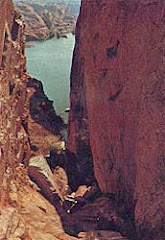
Hole-in-the-Rock
Like his brothers, Adam didn't linger long in Bluff, where heat, flash floods and raiding Indians made life difficult and unpleasant.  Several Robb brothers, including Adam, then moved to the Weber (or Webber) community near Mancos, Colorado, where Silas S. Smith headed the San Luis Mission.  Adam was to make Mancos his life-long home.

On Jul 10, 1881, Sarah gave birth to her third son, Franklin Adam, in Mancos.  She and Adam toiled to "till the virgin soil, work water ditches and build a home where they could rear their children."  Their only daughter, Sarah Alice, was born February 9, 1884.

Adam homesteaded in Weber Canyon and farmed a plot of ground there.  He raised sheep as well, and eventually had a large flock.  Adam has been variously described as a "saloon attender. which got him into intermittent trouble," a "sociable character around the saloons (who) was wont to take more than a friendly drink at times, occasionally getting him into a bit of trouble."

At some point, Sarah left Adam, most likely because of his drinking, got a divorce, and moved to Cowley, Big Horn, Wyoming, where she married Solomon Wardell on December 9, 1890.  (Editor's Note: Solomon and Sarah were Sealed in the St. George Temple 1890.  Mattie and Joseph were both born in Parowan, Utah.  They arrived in Cowley with their parents, step-brother William Heber Robb and other family members in October 1905.)

Daughter Alice eventually married Solomon Wardell's son.  In a letter dated April 9, 1963, she wrote to Patricia Robb Christiansen about the family.  She was living in Torrington, Wyoming, and was 79 years old. (Editor's Note: Alice and Sol were married May 19, 1903 in Snowflake, Navajo, Arizona.)

I visited several summers in Paragonah at the home f Uncle Bill and Aunt Ellen Robb... On one occasion, we called on Grandfather Robb in the old Robb home.  His daughter Jane Jones was caring for her father.  I found Grandfather old, feeble in mind and body and was told that he drank a lot.

At the times I visited Paragonah, young as I was, I noticed a feeling of resentment existing between the first family and the second.  I did not share in it however.  If Grandfather wished to leave his property to the second family, that was no concern of mine.  All of them were comfortably fixed according to that day; but I was more or less annoyed that my brothers and I were not recognized by my father in his will.  Uncle Bill had passed away leaving considerable means which was divided among his brothers and sisters.  My father inherited a share and at his death, his sister Ann Edwards and the Mason Lodge, of which he was a member, received all he had.

I knew little of the reasons for my mother seeking a divorce from my father, at which time she was awarded custody of the children and support for them.  But she never received a cent.  I do know this much, however; my father was away most of the time with cattlemen when there was such a bitter feeling against the Mormons.  He partook of that spirit and said, "I do not believe in old Joe Smith."

My brother Bert (Albertus) went to my father to ask him if he would help him through school, but was refused and ordered out of the house....

It was a worry and embarrassement to me that I did not have and know my own father.
Adam Franklin Robb's Will

In 1909 (Alice says it was 1905/06), Adam sent for his son Frank to come to Mancos from Parowan to help with the sheep operation, and he and Frank increased the herd and built up the home place.  Frank sang in the choir and was in the Sunday School Superintendency.  His son Arlo served as Bishop for 13 years.

Adam visited family and friends in Paragonah from time to time, and relatives remembered that he took a special liking to his nephew Morgan Edwards, son of Ann Robb and William Edwards.  When Adam died on July 19, 1919, at the age of 65, he remembered Morgan in his will.

Adam was buried in the Masons' plot in Mancos, and left a bequest to the Masons.  As of 1976, "the homestead and sheep operation are still in the hands of Ad Robb's descendants.  A grandson, Milton, has the home place and with the help of his son Wayne, operates a thriving sheep business.  Another grandson, Arlo, and his son Bryant care for another large sheep operation near Aztec and at Mancos."
_____________________________
Souces:
Helen Thatcher, great-granddaughter of Adam Robb, in conversations with James T. Worlton III
Renee Stephens, great-granddaughter of Adam Robnb, in conversations with Noel Brusman
Work by Nora Lund
"Come Back to My Valley, Historical Remembrances of Mancos
Colorado", by Fern D. Ellis, 1976 (Cortez Printers)
Alice Robb Wardell, in a letter to Patricia Robb Christensen